 Nairobi National Park Tours
Home › Guides › Nairobi National Park: Facts and Myths
Nairobi National Park: Facts and Myths
How Many Leopards Are In Nairobi National Park? Fewer than 10, down from an estimated 15 in 2009, according to researcher Yumi Yamane who has studied the park's leopards since 2009. Most online repeats of a bigger number are outdated guesses, so this page separates the sourced facts from the myths travellers hear.
Quick answer The leopard count and the facts that matter
Nairobi National Park holds fewer than 10 leopards today, against an estimated 15 in 2009. The park covers 117 square kilometers, so a male leopard's home range of up to 100 sq km explains why sightings are rare. Lions, cheetahs and hyenas are also present, and rhino sightings are a park specialty.
Key takeaways
- Compare every game drive on the nairobi national park tours homepage.
- Plan your hours with Things to Do in Nairobi National Park.
- Pick a vehicle in the Nairobi National Park 4x4 Safari with Pickup.
- Pair the park with wildlife stops on the Nairobi National Park Elephant Orphanage and Giraffe Centre Tour.
How many leopards are in Nairobi National Park?
Research points to fewer than 10 leopards in the park today.
This is the most common wrong belief about the park, so it comes first. Websites repeat a comfortable round number of 20 leopards. The field research says something smaller.
The sourced numbers, reconciled
Yumi Yamane has studied the urban leopard in Nairobi National Park since 2009 and collared four leopards between 2009 and 2011. Her research puts the park's leopard population at an estimated 15 animals in 2009 and fewer than 10 today, inside a park of 117.2 square kilometers. The figure of 20 that circulates on travel pages carries no study behind it.
The arithmetic helps you judge the claims. A male leopard's home range covers about 100 sq km and a female's is half that, in a park smaller than one male's range. That is why the researched count is a low single digit to low teens figure, not a healthy breeding population, and why you should not expect a leopard on every drive.
| Claim | Where it comes from | What to trust |
|---|---|---|
| Fewer than 10 leopards | Yumi Yamane's study, ongoing since 2009 | The best researched figure |
| 15 leopards | 2009 estimate for the 117.2 sq km park | A dated baseline, useful for the trend |
| 20 leopards | Unattributed repeat on travel sites | No published study behind it |
Why are leopards so hard to see in the park?
Leopards are solitary, few in number and hold ranges far larger than the park itself.
Even travellers who accept the low count still ask why a day in the park rarely produces a leopard. Three reasons stack up.
Range, cover and numbers
A male leopard's home range covers 100 sq km, half that for a female, against a park of 117.2 sq km. One cat can move through land where your vehicle will never pass. Leopards also favour riverine thickets and rocky gorge country rather than open plain, and with fewer than 10 animals in total the odds per drive are simply low.
There is one trap to avoid. Limited movements out of the park mean more leopard sightings inside the park, which gives a false impression that leopards are doing well. Seeing one on a good day is luck, not a sign the population has grown.
Where do leopards move inside the park?
The most cited spot is the Mbagathi gorge along the river, where leopards are seen moving.
Almost no guide maps leopard habitat in the park, so this section fills a real gap for drivers who want to tip the odds.
Leopard country on a game drive
Leopards are seen moving in the Mbagathi gorge along the river, so ask your driver to work the river line slowly. Guides and regulars on the ground also report one particular leopard keeps appearing around Number 30 heading towards Kingfisher campsite, which is the kind of local knowledge a driver brings that a map does not.
The practical move is to book a driver who knows these corners. A private vehicle can sit at the gorge longer than a shared van on a fixed loop, and the Nairobi National Park Private Tour in a 4x4 Land Cruiser runs six hours of private game time from $130 per person.
Tours That Fit
Shared and private drives that give you the hours to work the leopard corners.
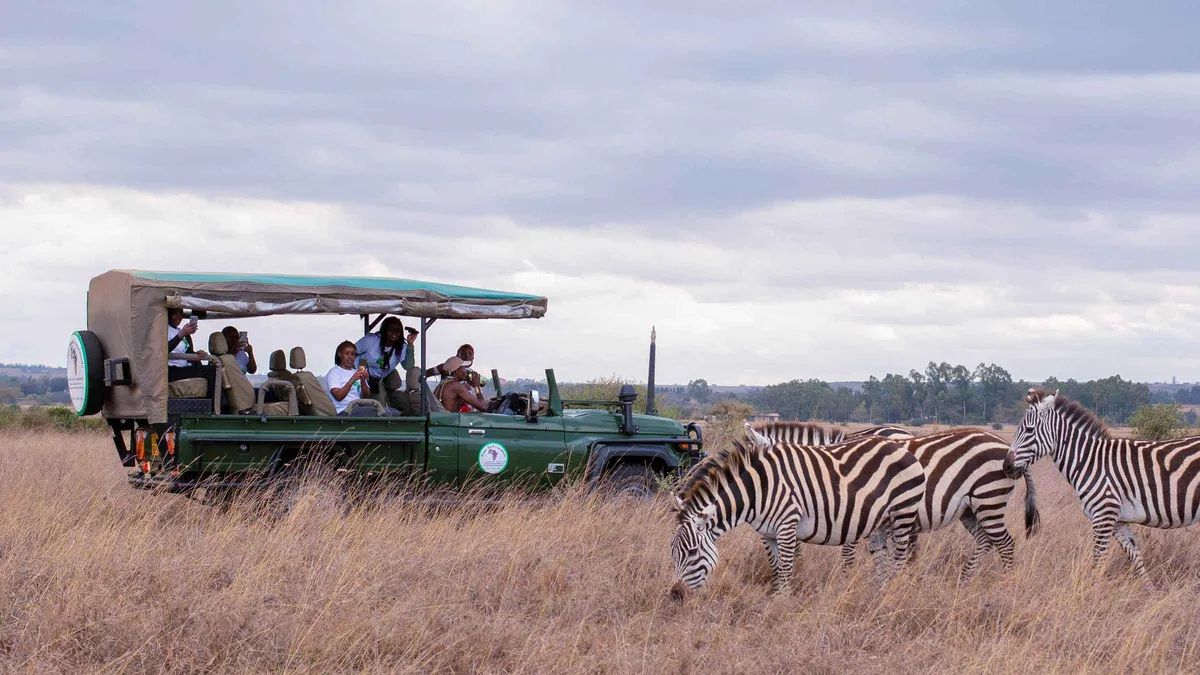
Nairobi National Park Half-Day Game Drive
Four hours on the plains in an open-roof van, morning or afternoon, with hotel pickup. The $80 KWS fee is bought online on top.
- Cancellation
- Free cancellation 24h
- Operator
- Kenya Bush Expeditions
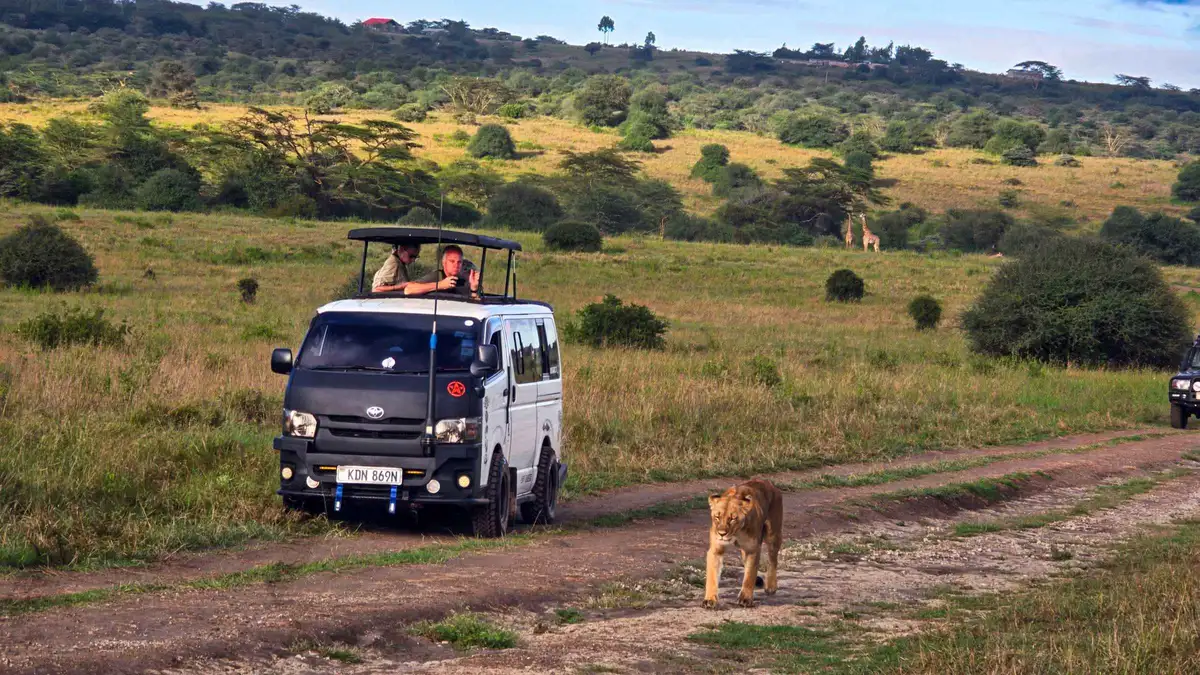
Nairobi National Park 5-Hour 4x4 Safari with Pickup
The same five hours in an open-roof 4x4 rather than a van, with a stop at the Ivory Burning Site. Morning, afternoon or evening.
- Cancellation
- Free cancellation 24h
- Operator
- Eloquent Tours
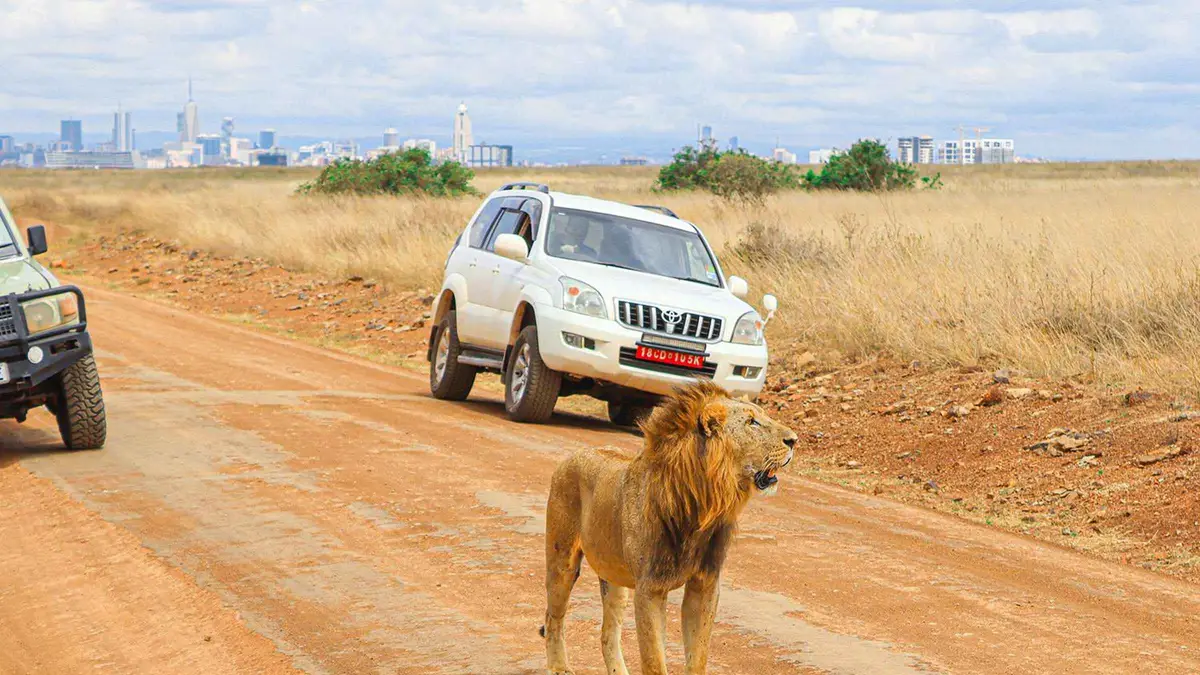
Nairobi National Park Private Tour in a 4x4 Land Cruiser
Your own open-roof Land Cruiser and driver-guide for up to six hours, with the Giraffe Centre added at no transport cost.
- Cancellation
- Free cancellation 24h
- Operator
- Olengugih Safaris
Do the park leopards have names?
Two famous individuals are Koko, a female, and Nguruman, a large male named by the Friends of Nairobi National Park.
A small population means individual cats become minor celebrities, and the named leopards are part of the park's story.
Koko and Nguruman
The two best known park leopards are Koko the female and Nguruman, a large male named by the Friends of Nairobi National Park. Researchers have followed the population closely, with Yumi Yamane collaring four leopards between 2009 and 2011 to map how these cats live beside a capital city.
Naming matters for a reason beyond charm. It turns a vague population estimate into identifiable animals that people notice when one disappears, which is how a small urban population stays on the record.
Is the leopard population shrinking because of the city?
Infrastructure such as the Standard Gauge Railway and the southern bypass fragments leopard space, and the southern bypass has split Ngong Road Forest into five sections.
The trend from 15 leopards to fewer than 10 has a cause you can see from the game drive tracks.
Roads, rail and broken habitat
Infrastructure like the Standard Gauge Railway and the southern bypass cuts through the corridors leopards use, and the southern bypass has split Ngong Road Forest into five separate sections. A cat that needs up to 100 sq km cannot move freely across land stitched apart by fences and roads.
For a visitor this is context, not a reason to skip the park. It explains why the leopard count fell and why the cats you do see are committed to staying inside the 117 square kilometers the park protects.
Myth: the park is too small for real wildlife?
The park holds lion, leopard, cheetah and hyena, plus giraffes, rhinos and zebras against the Nairobi skyline.
People hear the word small and assume the wildlife is thin. The species list says otherwise.
What you can actually see
Species found in the park include lion, leopard, cheetah and hyena, with diverse bird species as a visitor attraction. The park is a short drive from the city centre with lions, giraffes, rhinos and zebras against the Nairobi skyline, and it offers a high chance of seeing rhino, which makes it a family-friendly safari.
The park was gazetted in 1946, making it Kenya's and East Africa's first national park, and its unfenced southern boundary makes it the northern limit for a dry-season wildlife migration corridor. Four of the Big Five are here and there are no elephants, which is why many visitors add the Sheldrick orphanage next door, as on the Nairobi National Park, Elephant Orphanage and Giraffe Centre Shared Day.
| Animal | In the park? | Note |
|---|---|---|
| Lion | Yes | Against the Nairobi skyline |
| Leopard | Yes | Fewer than 10, rarely seen |
| Cheetah | Yes | On the open plains |
| Hyena | Yes | Mostly seen at dawn |
| Rhino | Yes | A high chance of seeing rhino |
| Elephant | No | See them at the Sheldrick nursery instead |
Source: Kenya Wildlife Service.
What does a visit cost and when should you go?
KWS conservation fees run $80 per adult non-resident, gates open at 6:00 AM, and KWS names July to December and December to March as the high season for game viewing.
With the myths settled, these are the practical facts every traveller needs before booking.
Fees, seasons and hours
The KWS conservation fee schedule confirms Nairobi National Park entry at $80 (USD 80) per non-resident adult and $40 (USD 40) per child, $40 (USD 40) per African citizen adult and $20 (USD 20) per child, KES 1,350 per Kenya resident adult and KES 675 per child, and KES 1,000 per East Africa citizen adult and KES 500 per child. A Nairobi Package combining the park, the Animal Orphanage and the Safari Walk costs $105 (USD 105) per non-resident adult. Tour prices are separate from park fees, so a shared half-day drive listed at $33 per person still pays the $80 entry at the gate.
KWS groups July to December and December to March as the high season for game viewing, citing short grass and sunny weather, while April to June is the low season of the long rains when some tracks turn muddy and a 4x4 such as the Nairobi National Park 5-Hour 4x4 Safari with Pickup is the safer pick. Gates open at 6:00 AM and close at 6:00 PM, and animals are most active before the heat of the day, which is why dawn drives dominate.
The park sits about 8 km from the Nairobi CBD via Nyayo National Stadium and Langata Road, with KWS's own about text alternatively stating 10 kilometers from the Central Business District. KWS visitor tips list clean drinking water, a camera, binoculars, sunscreen, insect repellent and sunglasses.
Sources: Kenya Wildlife Service, Kenya Wildlife Service.
Facts and Myths: Quick Questions
How many leopards are in Nairobi National Park today?
Fewer than 10, down from an estimated 15 in 2009, per Yumi Yamane's study of the park's urban leopards. Source: Nomad Africa.
Are there rhinos in Nairobi National Park?
Yes. The park offers a high chance of seeing rhino alongside lions, giraffes and zebras, which makes it a family-friendly safari. Source: KEVIC Tours.
How many lions are in Nairobi National Park?
Lions are found in the park, but a current count is not stated. Travel pages confirm lions, leopard, cheetah and hyena among the species present. Source: Google index result.
How many rhinos are in Nairobi National Park?
A current rhino count is not stated. The park is noted for a high chance of seeing rhino on a game drive. Source: KEVIC Tours.
Which African country has the most leopards?
Not stated in the park's own sources. What is known is that Kenya's leopard strongholds include Nairobi National Park and the Masai Mara, where counts are separate from the park's fewer than 10.
How many leopards are left in Masai Mara?
Not stated. The researched figure of fewer than 10 applies to Nairobi National Park, and no source on this page gives a Masai Mara number.
Does Kenya have jaguars?
No source on this page states that jaguars live in Kenya. Jaguars are American cats, and Kenya's big cats are lion, leopard and cheetah.
Is Nairobi National Park worth visiting if I might not see a leopard?
Yes. Travellers call it absolutely worth visiting, especially as the first stop on a Kenya itinerary, with rhinos, lions and giraffes against the skyline a short drive from the city. Source: Tripadvisor forum.
More Guides
- Things to Do in Nairobi National Park
Game drives from $33, the Black Rhino Sanctuary, Hippo Pools and 400 plus bird species in 2027. See the prices and compare tours.
- Giraffe Centre Nairobi: Fees, Hours and Feeding
Hand-feed Rothschild's giraffes in 2027. Entry is $15 (Ksh 1,500) for a non-resident adult, open 9:00 AM to 5:00 PM daily. See the prices.
- Is Nairobi National Park Worth It?
Yes: 2027 entry is $80 plus a shared drive from $33, with about 111 black rhinos 10 km from the city centre. See what you get.